Johns Groundwork Services Ltd
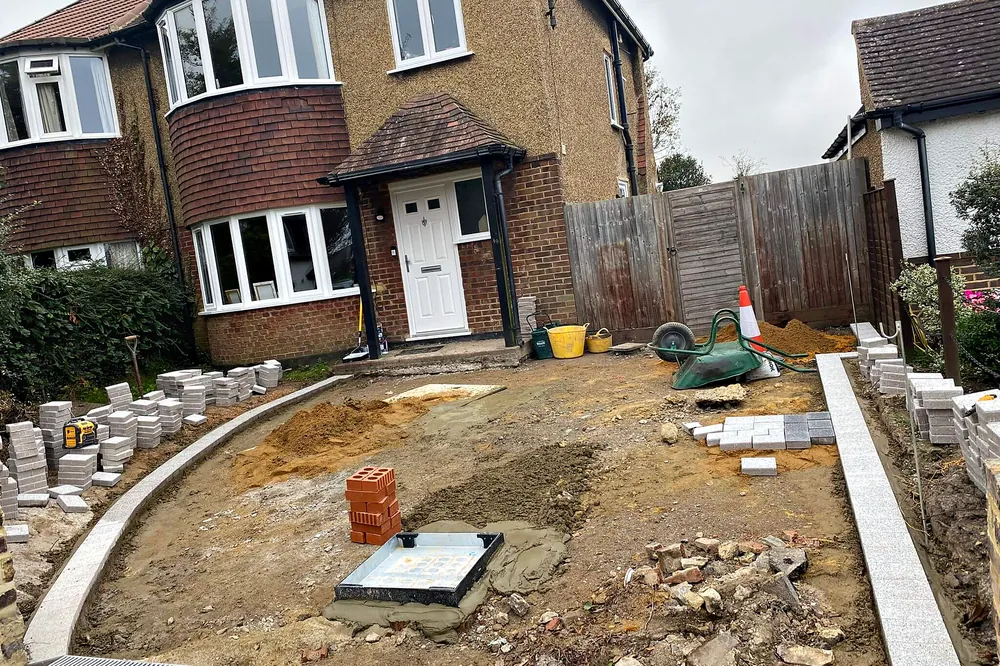
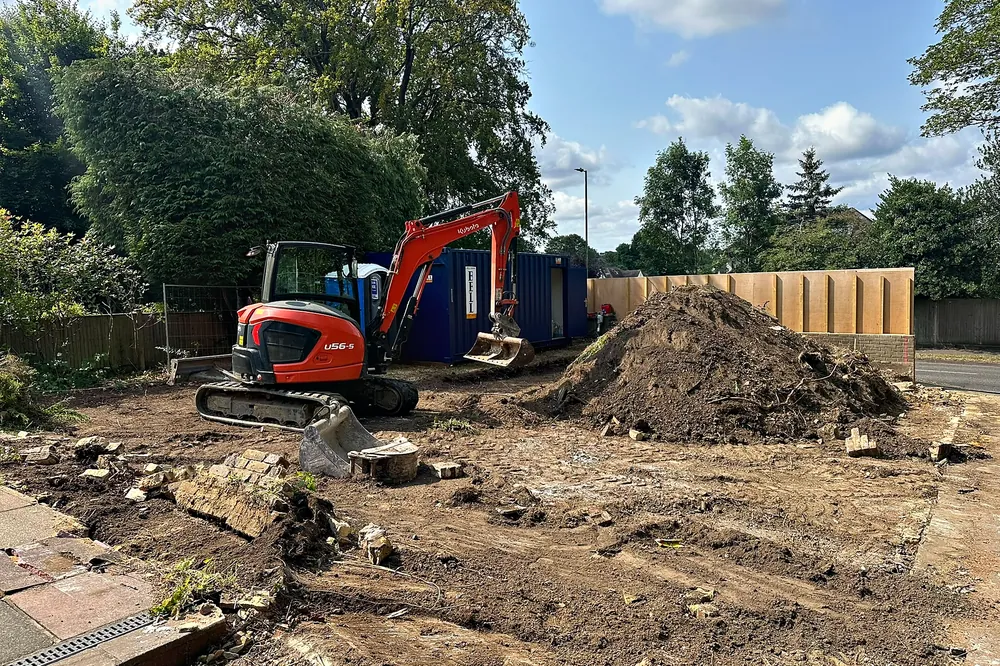
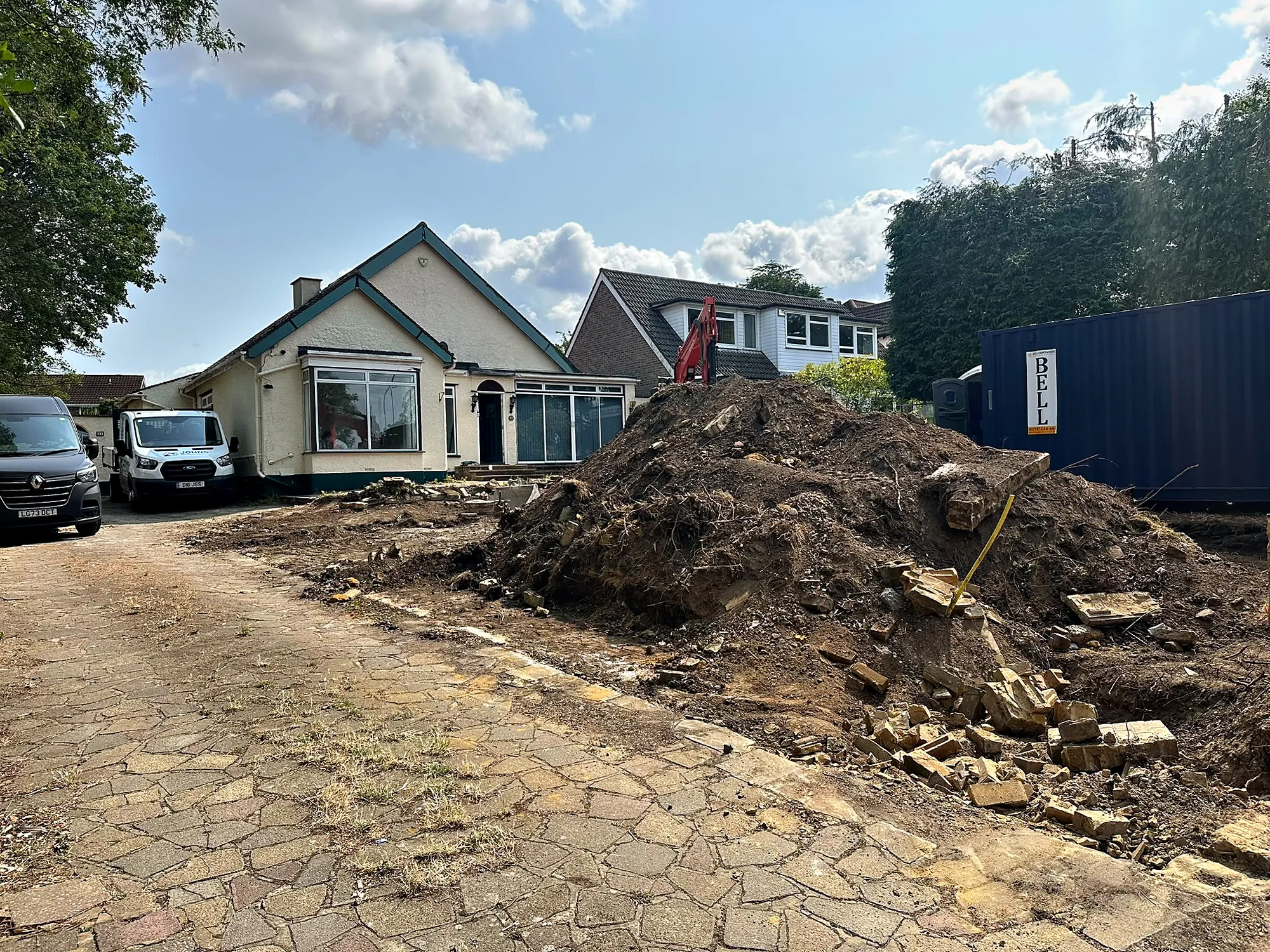
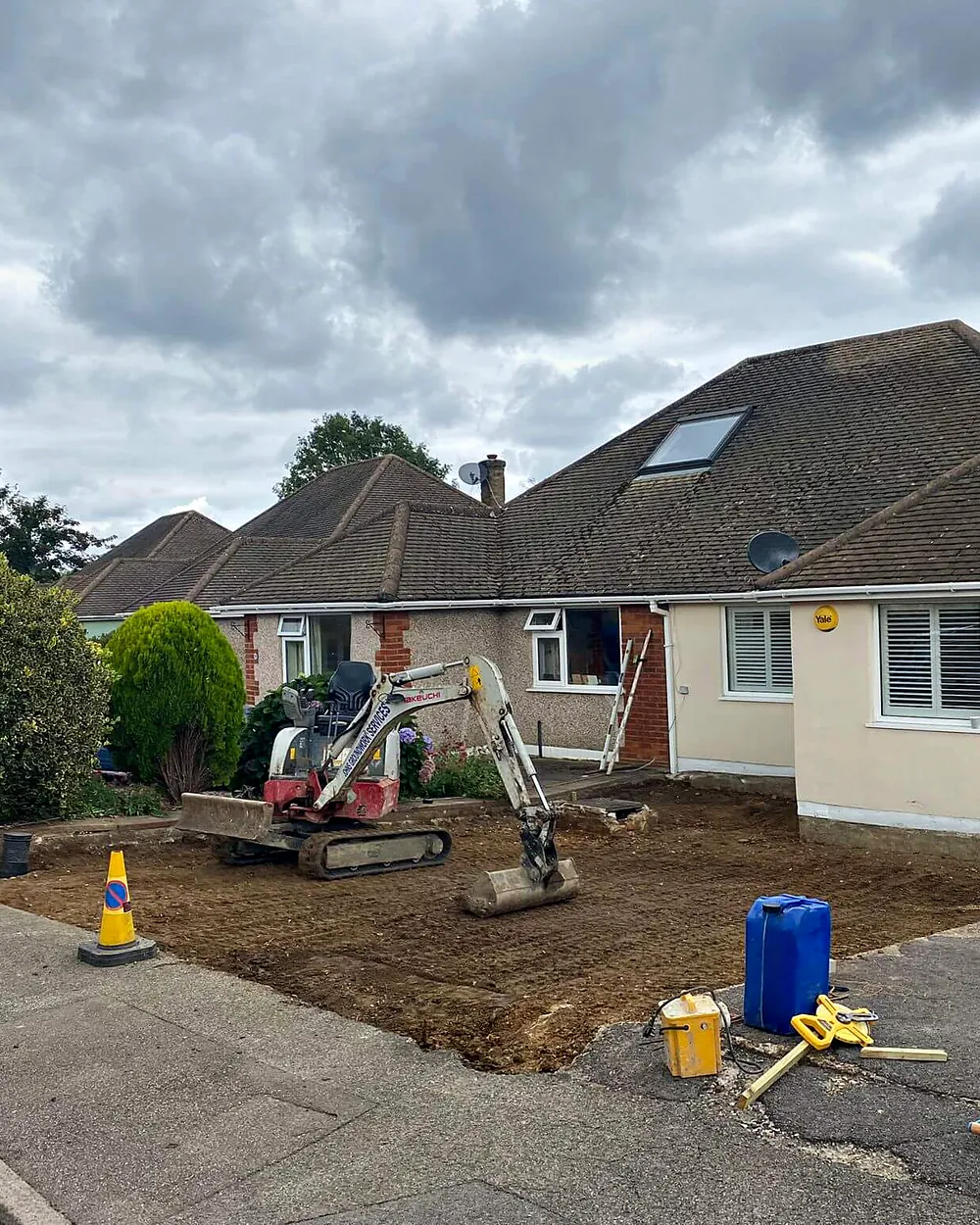
A front drive dug out with the spoil heaped up for collection

Block Paving, Tarmac, Resin And Gravel

New Driveways in Surrey

New driveways dug out, edged, drained and built up in layers by a groundwork team, so the surface you choose stands up to the weight of the car and the weather.

Overview

A New Drive Starts With What Lies Underneath

A driveway carries the weight of a car every day, and a delivery van now and then, so it is built very differently from a patio. Most of what decides how long it lasts sits below the surface: how deep it is dug, what the ground is like at the bottom, how well the sub base is compacted, and where the rain goes. That is the groundwork side of the job, and it is our trade.

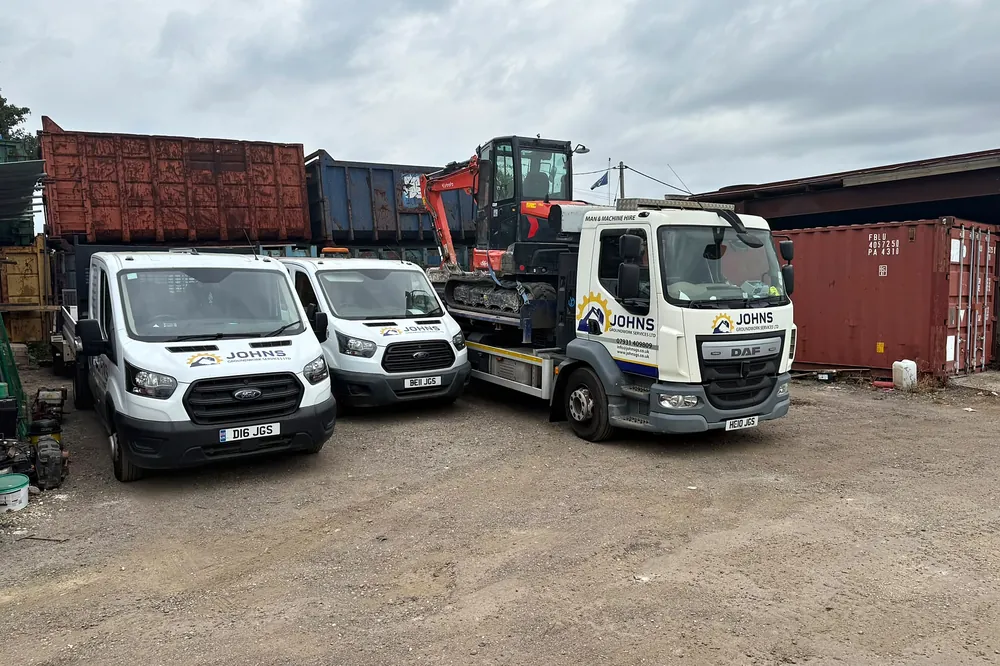
Johns Groundwork Services builds new driveways in block paving, tarmac, resin and gravel for homeowners, builders and developers across Surrey, South London and West Sussex. John runs the business and the work on site. We talk through the design, the colour and the texture with you, dig out with our own machines, take the spoil away on our own 16 tonne grab lorry, and lay the surface you have chosen.

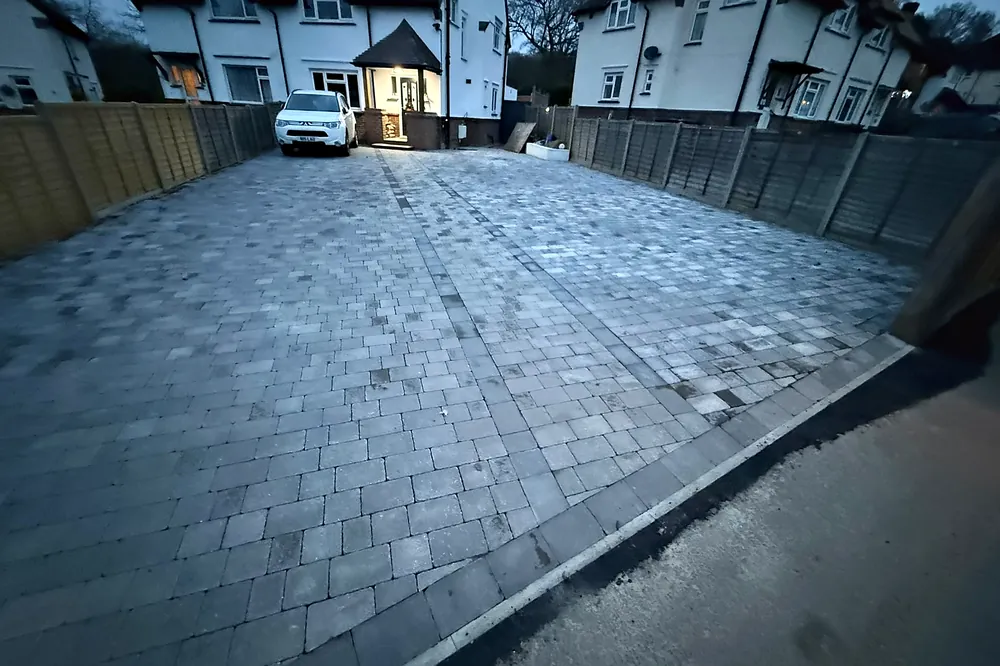
A new grey block paved drive in front of a pair of houses at dusk
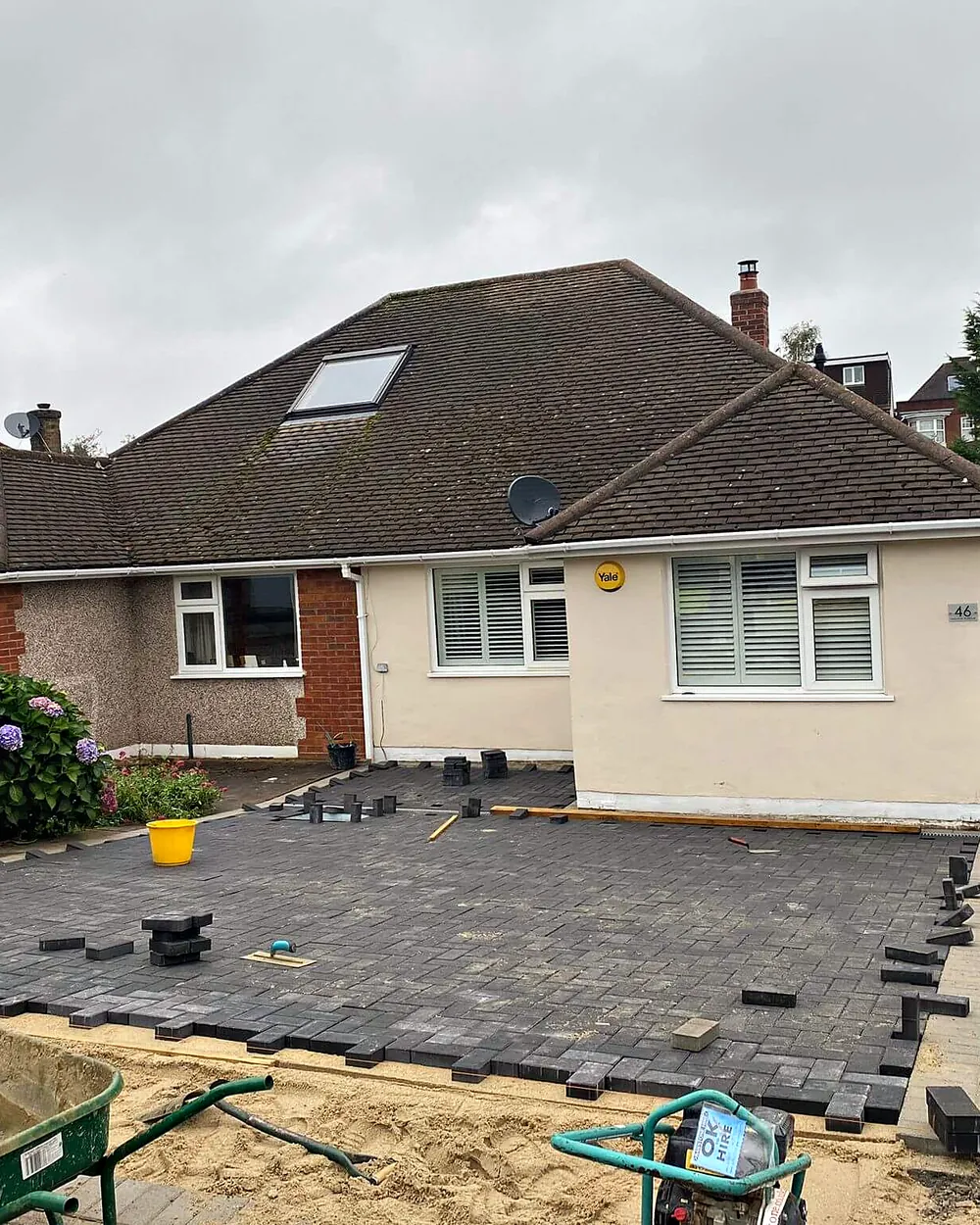
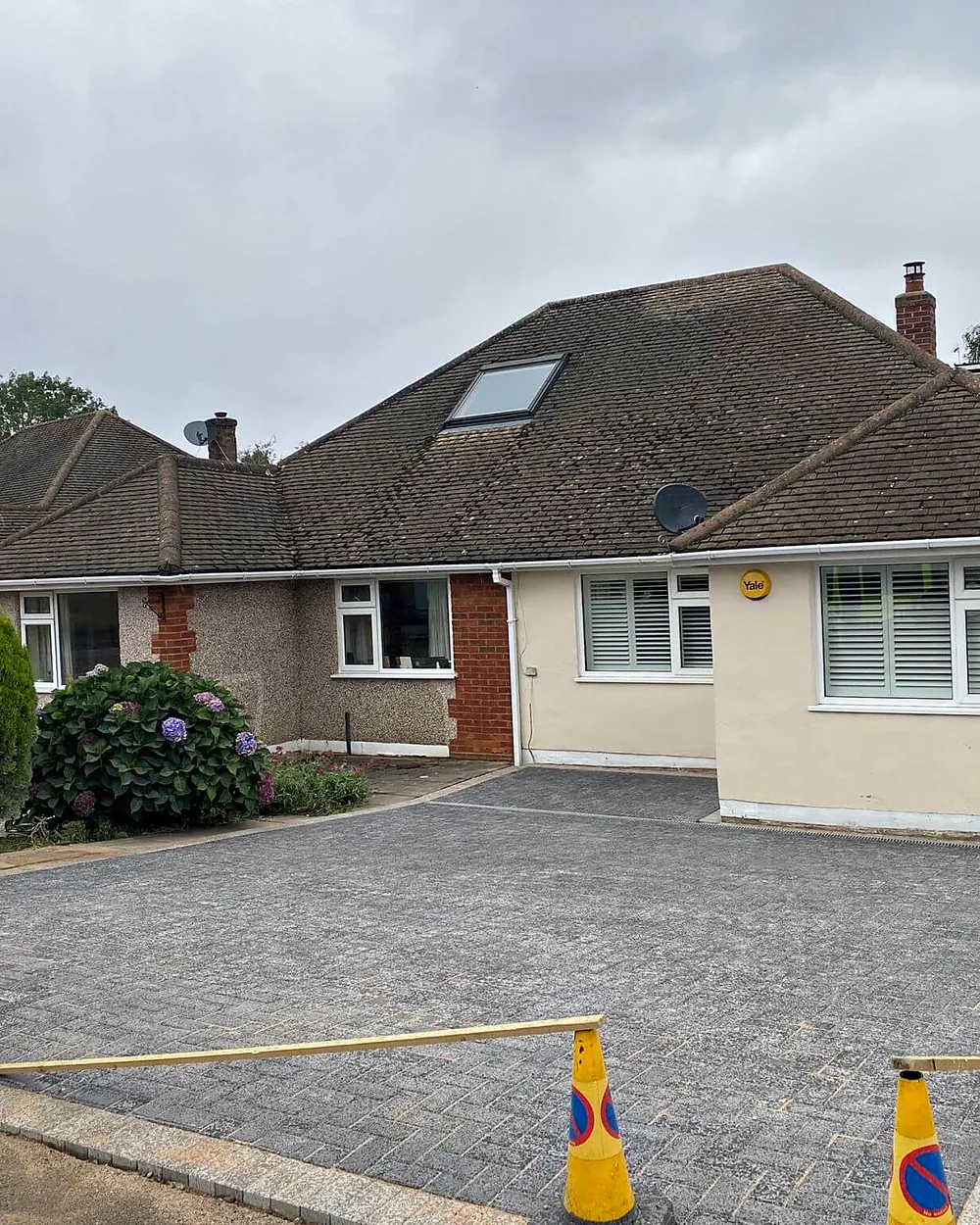
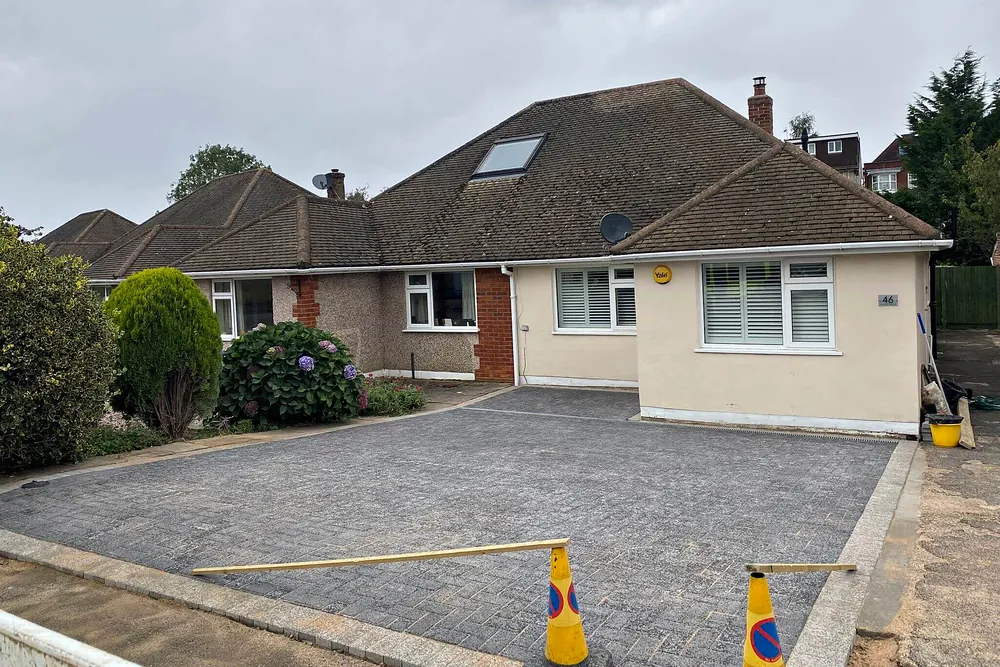
A finished charcoal block paved bungalow drive

01 / 05

Choosing the Right Surface

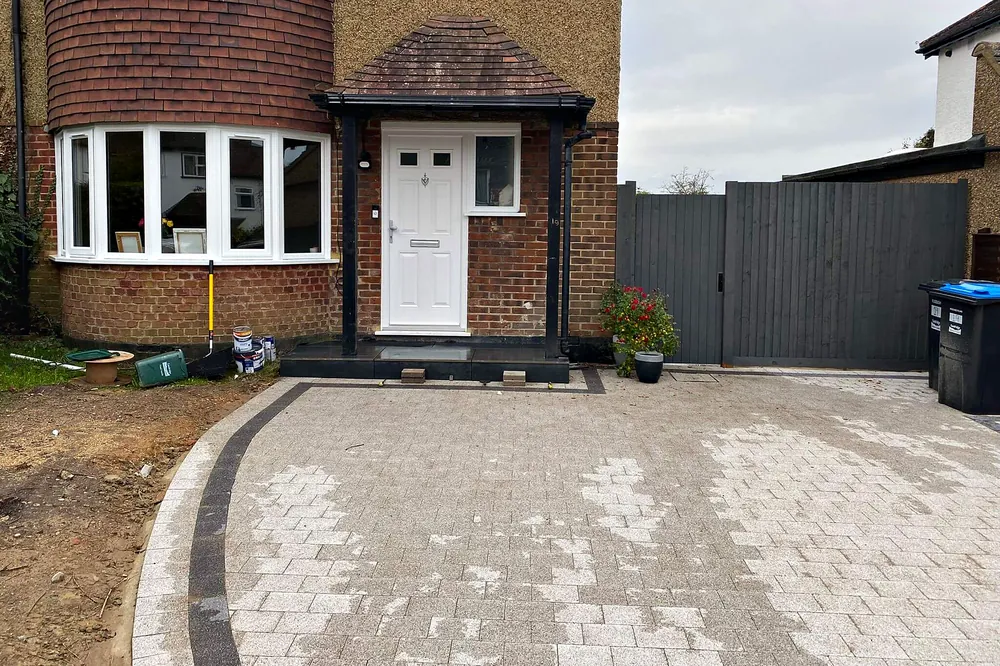
Block paving is the most flexible choice. Concrete blocks come in many colours and can be laid to a herringbone, basketweave or banded pattern, and because each block is separate, a damaged one can be lifted and replaced without disturbing the rest of the drive. Our Block Paved Driveway project, a new drive in grey block paving with a darker border, shows the clean, solid look it gives a house.

Tarmac gives a smooth, skid resistant surface at a lower build height, and suits long or wide drives as well as commercial entrances. Permeable tarmac is also available where the drive needs to let water through. Resin bound surfaces mix natural stone with resin and are trowelled smooth, giving a smooth, even finish that water drains straight through. Resin bonded, where loose stone is scattered onto a coat of resin, gives a more textured finish. Gravel is the simplest permeable surface of all, laid over a compacted base with a solid edge to hold it in.

  • Block paving in a choice of colours and laying patterns
  • Tarmac, including permeable tarmac
  • Resin bound and resin bonded finishes
  • Gravel driveways with a properly edged base
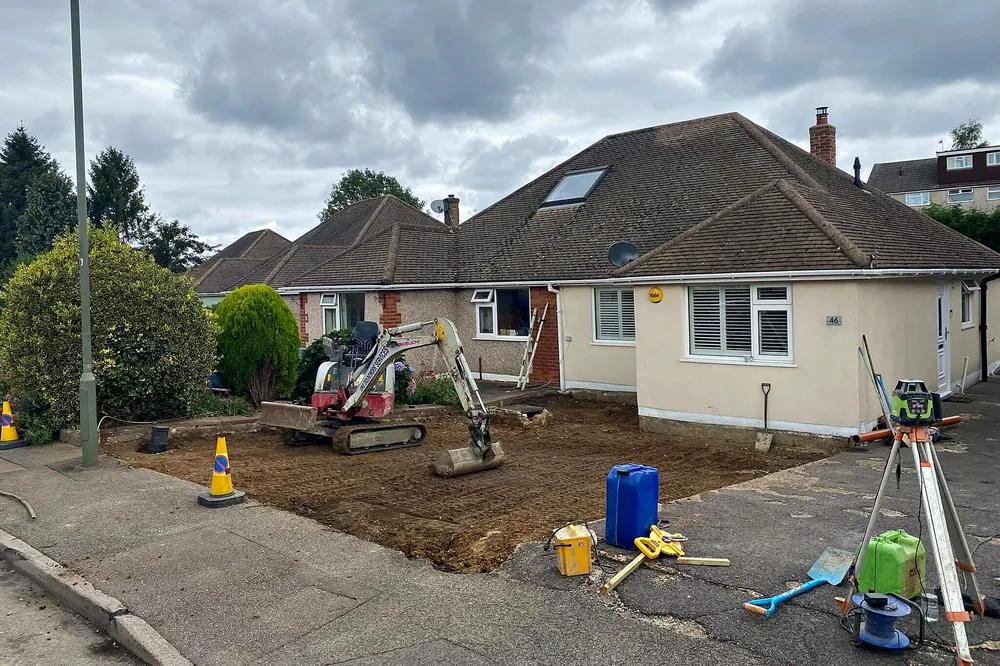
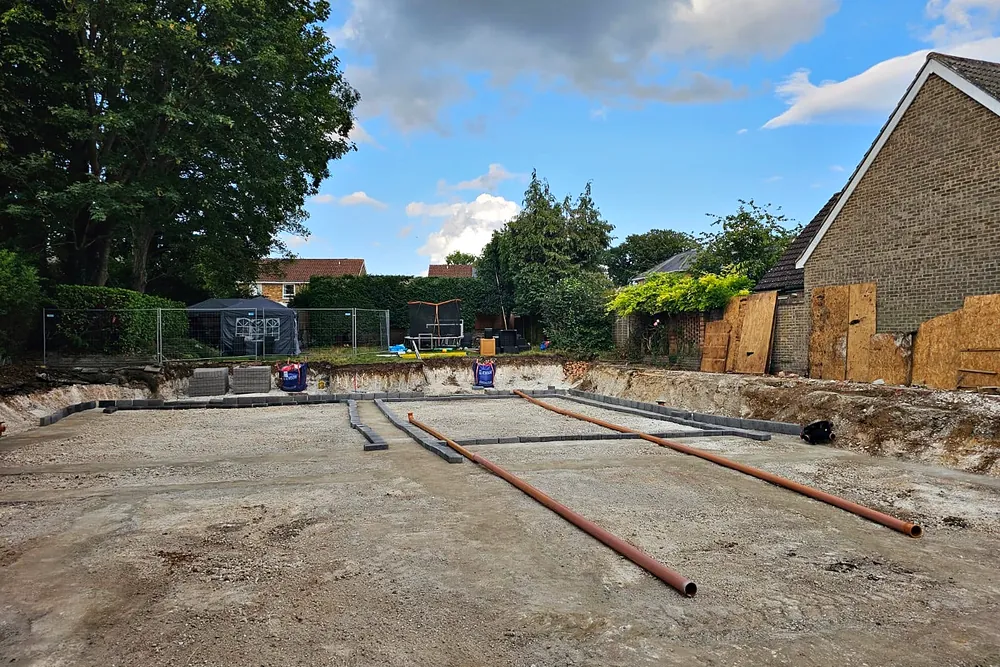
A drive dug out to firm ground with the edging set

02 / 05

How Deep a Driveway Is Built

A block paved drive is typically 50 to 60mm of block on about 40mm of screeded sharp sand, over about 150mm of MOT Type 1 crushed stone laid in layers and compacted with a plate or roller. Under that goes a geotextile membrane to keep the stone base apart from the soil. That means digging out roughly 250mm below the finished surface before anything is laid, and further where the dig finds soft clay, old rubble or made up ground.

Tarmac is built from about 150mm of compacted sub base, a binder course of about 50mm that carries the load, and a surface course of about 20mm rolled while hot. Resin bound needs a base that lets water pass, so it is usually laid about 18mm thick on around 70mm of open graded porous asphalt, over a permeable crushed stone sub base. Whatever the surface, the bottom of the dig is levelled and compacted, with falls set so water runs away from the house.

  • Block paving: about 250mm dug out below finished level
  • Tarmac: about 150mm sub base, 50mm binder, 20mm surface
  • Resin bound: about 18mm on 70mm porous base and sub base
  • Deeper digs where the ground is soft or made up
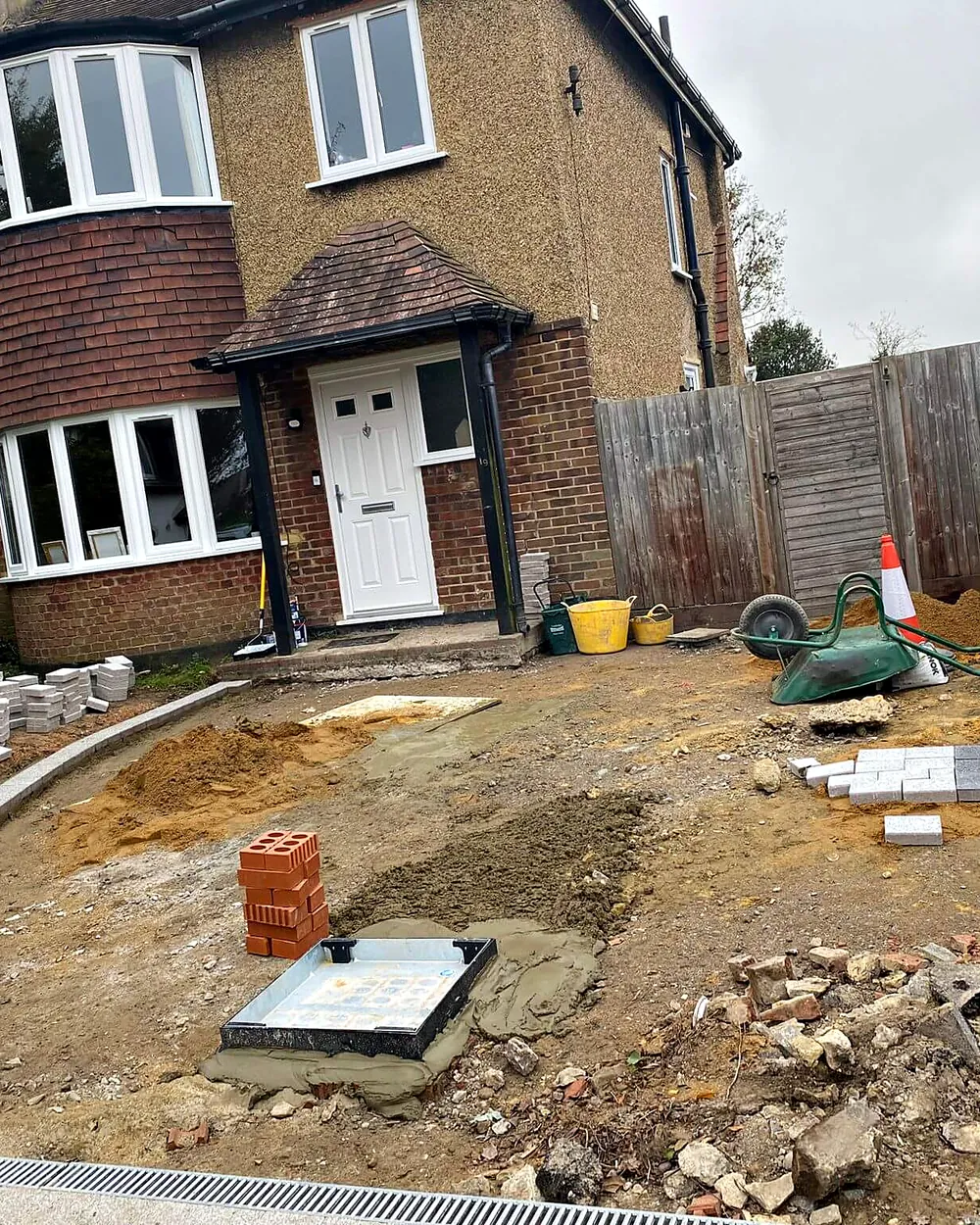
New edging set around a dug out front drive, the inspection chamber raised

03 / 05

Edging, Levels and Drainage

Block paving and gravel both need a solid edge. Kerbs or edging blocks are set on a concrete bed and haunched behind, so the surface cannot spread outwards under the weight of a car. Edges are set to line and level first, and they guide everything laid between them.

Water is planned before the dig starts. A drive is laid to a fall away from the house, and where it runs down towards a garage or front door, a drainage channel across the slope collects the water and takes it to a suitable outlet. The finished level against the house is kept below the damp proof course, which building regulations guidance expects to sit at least 150mm above the ground outside. Existing inspection chamber covers within the drive are adjusted to the new finished level.

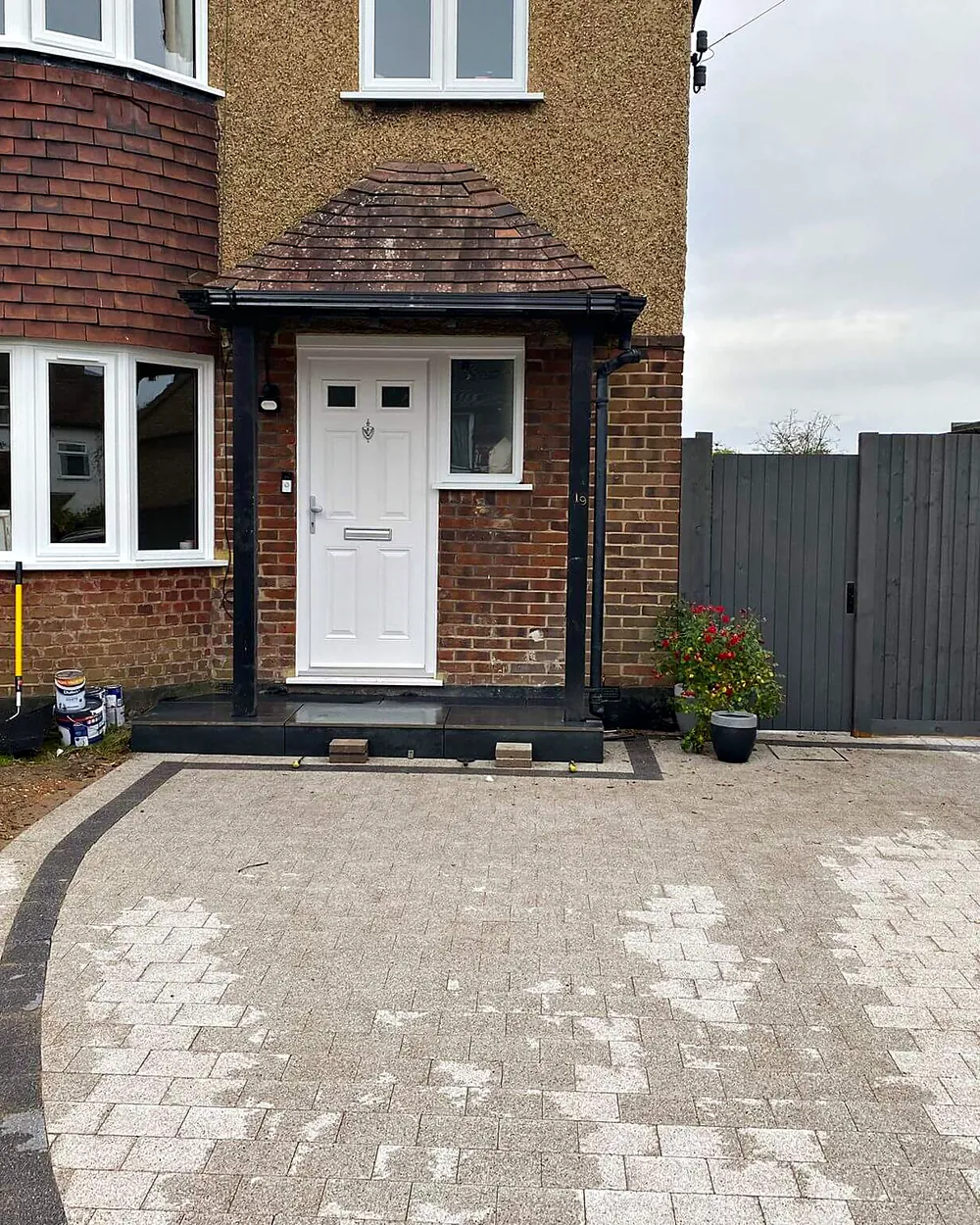
A finished block paved front drive with a contrasting border

04 / 05

Front Gardens and Planning Permission

In England, paving more than 5 square metres of a front garden does not need planning permission as long as the surface is permeable, or the rain runs off onto a lawn or border within your own property. A non permeable surface over 5 square metres that drains onto the road does need planning permission. Permeable options include gravel, resin bound and permeable tarmac.

Standard block paving and conventional tarmac shed most of their water, so on a front driveway they are laid to fall towards a lawn, a border or a drainage channel that keeps the water on your land. Some properties have had these rights removed by a planning condition or an Article 4 direction, so it is worth checking with your local planning authority if your home is affected. We plan the surface and drainage with these rules in mind on the site visit.

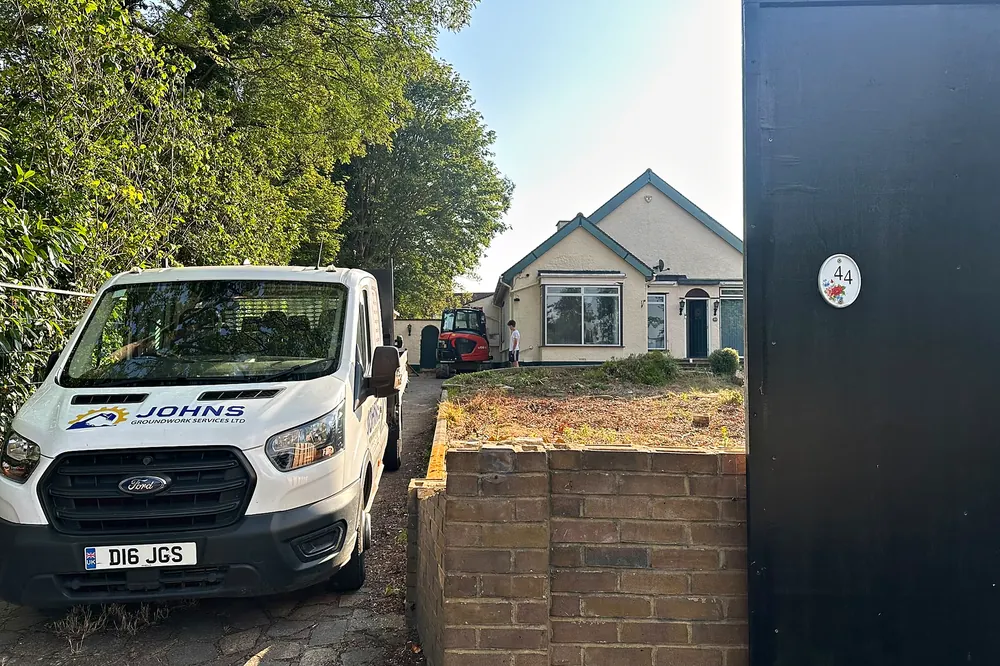
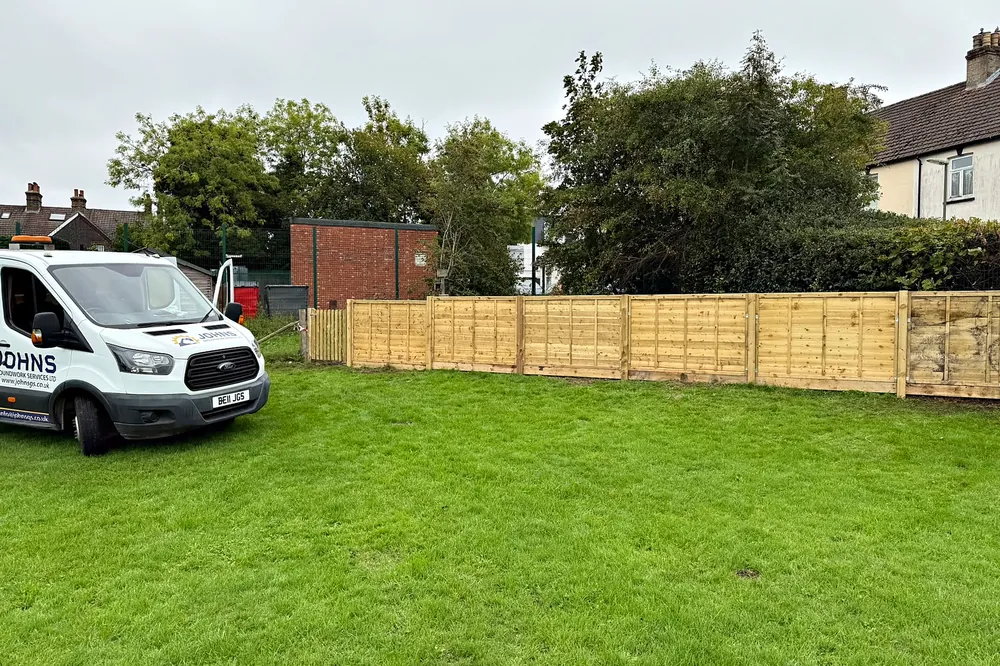
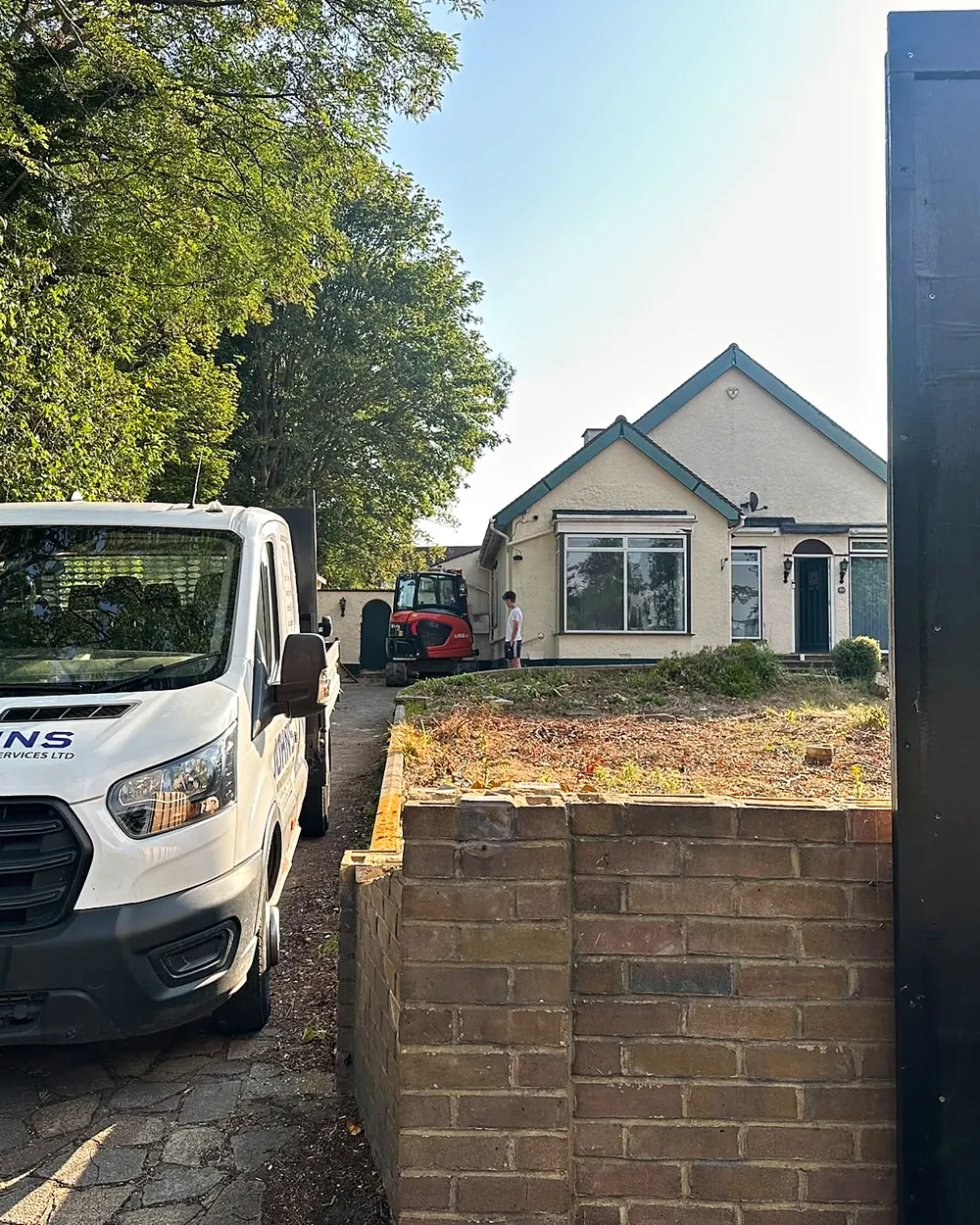
A Johns van parked outside a bungalow before the work starts

05 / 05

Dropped Kerbs and the Highway

If the new drive needs a dropped kerb to reach the road, that part sits on the public highway, so it needs consent from the highway authority before anyone can build it. Around us that is Surrey County Council for most of Surrey, Croydon Council for Purley and the rest of the borough, and West Sussex County Council for Crawley and East Grinstead. Each one sets its own rules, fees and process, and decides who may build the crossing.

In Surrey, for example, the county council asks for written confirmation from your district or borough council that planning permission is not needed, or a copy of the permission, and the crossing is built by one of its approved contractors. A crossing onto a classified road is more likely to need planning permission. We advise on whether your drive needs one and set the levels of the new driveway to meet the crossing, but the dropped kerb itself is arranged through the council.

The build up, layer by layer

What Goes Under a New Driveway

Typical depths for a domestic drive or patio. The right build up depends on the ground and the use, and we confirm it on the site visit.

  1. Block paving50 to 60mmConcrete blocks laid to a pattern and kiln dried sand brushed into the joints.
  2. Laying courseabout 40mmSharp sand screeded to level, the bed the blocks are vibrated into.
  3. Sub baseabout 150mmMOT Type 1 crushed stone, laid in layers and compacted with a plate or roller.
  4. MembranegeotextileKeeps the sub base separate from the soil below and slows weeds.
  5. Formationdug to firm groundThe ground dug out, levelled and compacted, with falls set so water runs away.
  1. Surface courseabout 20mmA fine, close finish, rolled while hot for a smooth, skid resistant surface.
  2. Binder courseabout 50mmA coarser layer that carries the load and gives the surface its strength.
  3. Sub baseabout 150mmMOT Type 1 crushed stone, laid in layers and compacted with a roller.
  4. MembranegeotextileKeeps the sub base separate from the soil below and slows weeds.
  5. Formationdug to firm groundThe ground dug out, levelled and compacted, with falls set so water runs away.
  1. Resin bound surfaceabout 18mmNatural aggregate mixed with resin and trowelled smooth. Water drains straight through it.
  2. Porous baseabout 70mmAn open graded asphalt that lets water pass while giving the resin a firm base.
  3. Sub baseabout 150mmA permeable crushed stone sub base, compacted, so the whole drive drains.
  4. MembranegeotextileKeeps the sub base separate from the soil below and slows weeds.
  5. Formationdug to firm groundThe ground dug out, levelled and compacted.

What is included

What Is Included

  1. 01

    Design, Colour and Texture

    We talk through the layout, the surface, the pattern and the colour on the site visit and source the materials.

  2. 02

    Digging Out to Sound Ground

    The old drive and soil are dug out with our own machines to the depth the surface needs, deeper where the ground is soft.

  3. 03

    Edging Set in Concrete

    Kerbs and edging set on a concrete bed and haunched, so the drive keeps its shape.

  4. 04

    A Compacted Sub Base

    Membrane and crushed stone laid in layers and compacted with a plate or roller to the right depth.

  5. 05

    Falls and Drainage

    Levels set away from the house and the damp proof course, with channels where the water needs collecting.

  6. 06

    Spoil Taken Away

    Old surfacing and soil loaded onto our 16 tonne grab lorry, with tippers sourced for bigger digs, as a registered upper tier waste carrier.

How the job runs

How a Driveway Is Built

  1. 01

    Site Visit and Free Quotation

    We look at the ground, the levels, the drainage and the access to the road, then send a clear written quotation.

  2. 02

    Dig Out and Load Away

    The old surface and soil come out to the planned depth and go straight onto the lorry.

  3. 03

    Edges, Drainage and Sub Base

    Edging and channels are set to line and level, then the membrane and sub base go down and are compacted.

  4. 04

    Laying the Surface

    Blocks, tarmac, resin or gravel are laid to the agreed finish and pattern.

  5. 05

    Finish and Clear Up

    Joints are filled, the drive is checked for falls and the site is cleared and left tidy.

Charcoal block paving being laid on a new drive

Where we work

New Driveways Near You

We carry out new driveways across East Surrey, South London and West Sussex. Every town here has its own page.

Questions

Questions About New Driveways

Do I Need Planning Permission for a New Driveway?

Usually not, as long as the surface is permeable or the rain drains onto a lawn or border on your own property. In England, paving more than 5 square metres of a front garden with a surface that drains onto the road does need planning permission. We advise on the right surface and drainage on the site visit.

How Deep Will You Dig for a Block Paved Drive?

Usually about 250mm below the finished surface: around 150mm of compacted sub base, a 40mm sand laying course and the blocks themselves. Where the dig finds soft clay or old made up ground, we go deeper until the base sits on sound ground.

Which Is Better, Block Paving, Tarmac or Resin?

Each suits a different drive. Block paving offers the most colours and patterns and is easy to repair, tarmac is smooth and practical for long or wide drives, and resin bound gives a smooth finish that water drains through. We help you weigh up the look, the drainage and the budget.

Can You Build the Dropped Kerb as Well?

A dropped kerb is on the public highway, so it needs consent from the highway authority, such as Surrey County Council, Croydon Council or West Sussex County Council, and each sets who may build it. We advise on whether you need one and build the drive to meet it, while the crossing itself is arranged through the council.

Will the New Drive Cause Puddles or Damp?

Not if the falls and levels are right. We lay every drive to fall away from the house, keep the finished level below the damp proof course and add a drainage channel wherever water would otherwise run towards a door or garage.

Do You Take the Old Driveway Away?

Yes. The old surface, sub base and soil are loaded onto our own 16 tonne grab lorry, with tippers sourced for bigger jobs, and taken away. We are an upper tier waste carrier registered with the Environment Agency, CBDU416264.

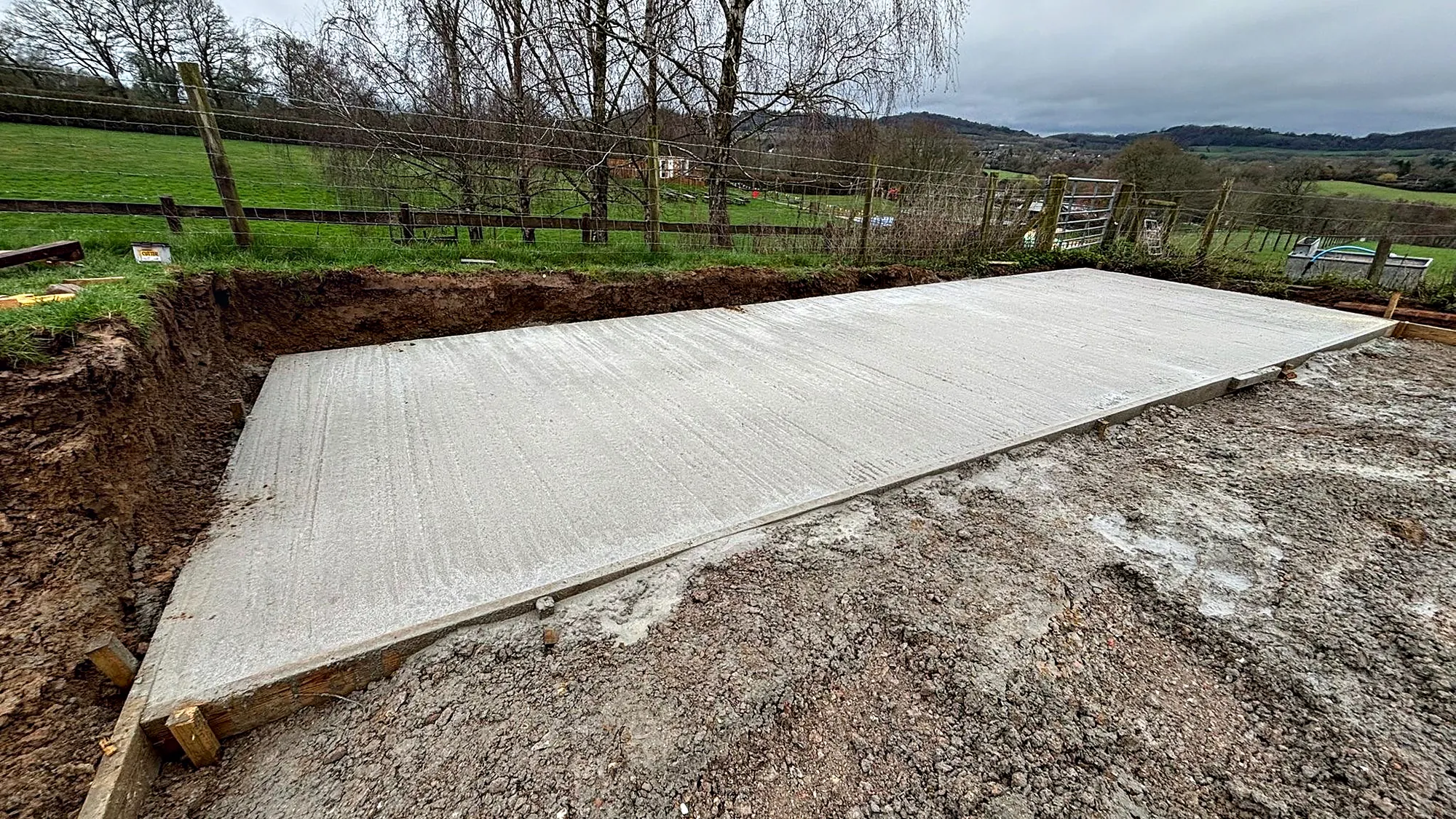
A long concrete base finished in a field

Free site visits · Free quotations

Arrange a Free Driveway Survey

Send us a few details or photographs of the drive you have now and we will arrange a free site visit to look at the ground, the levels and the drainage. You will receive a clear, free quotation with no obligation. Call or WhatsApp 07931 409809, or email info@johnsgs.co.uk.